How Restaurants Reduce Food Cost by 30% Using Frozen Foods (Complete Guide for Restaurants, Hotels & Cloud Kitchens)
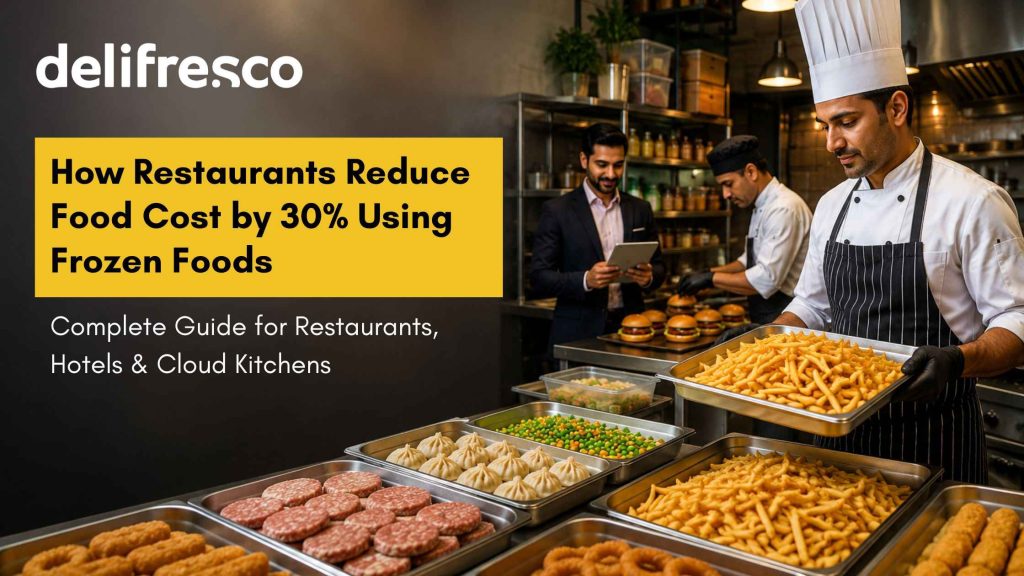
Running a profitable restaurant has become more challenging than ever. Rising ingredient prices, increasing labor costs, food wastage, inventory losses, and inconsistent demand can quickly reduce restaurant profit margins. Whether you operate a restaurant, hotel, café, QSR chain, or cloud kitchen, controlling food costs remains one of the most important factors for long-term success.
Many successful food businesses now focus on restaurant food cost reduction through smarter inventory management, better purchasing decisions, and the strategic use of frozen foods. Frozen food solutions help restaurants maintain consistency, reduce waste, improve kitchen productivity, and increase operational efficiency without compromising quality.
What Is the Fastest Way for Restaurants to Reduce Food Costs?
Restaurants can reduce food costs and improve profitability by following six proven strategies:
Reduce food wastage
Improve inventory control
Use portion-controlled frozen foods
Minimize spoilage
Improve kitchen efficiency
Standardize recipes
Frozen foods support all six strategies. They help restaurants reduce ingredient wastage, improve inventory turnover, simplify food preparation, and maintain consistent portion sizes. As a result, restaurants, hotels, cafés, and cloud kitchens can lower operating costs while improving customer satisfaction.
For businesses looking to improve restaurant food cost control, frozen foods offer a practical and scalable solution that supports growth, profitability, and operational consistency.
Why Food Cost Is One of the Biggest Challenges for Restaurants Today
Every restaurant owner wants to increase profits. However, many businesses struggle because food costs continue to rise while customer expectations remain high. Restaurants, hotels, cafés, QSR chains, and cloud kitchens must balance quality, speed, consistency, and profitability every day.
Without proper restaurant food cost control, even busy establishments can experience shrinking margins. This is why restaurant inventory management, food waste reduction, and cost optimization have become top priorities across the food service industry.
Rising Ingredient Prices
Food inflation continues to impact restaurants across India. The prices of vegetables, dairy products, cooking oils, packaging materials, and other essential ingredients often fluctuate throughout the year. These fluctuations make it difficult to maintain stable menu pricing and predictable profit margins.
When ingredient costs increase, restaurants face two choices. They can either absorb the additional expense or pass it on to customers. Both options affect profitability. As a result, many operators now focus on restaurant cost control strategies that reduce waste and maximize the value of every ingredient purchased.
Frozen foods provide greater price stability and help businesses plan inventory more effectively. They also reduce dependence on daily market fluctuations, allowing restaurants to manage food costs with greater confidence.
Staff Shortages and Labor Costs
Labor costs represent one of the largest operating expenses for restaurants and cloud kitchens. Finding trained kitchen staff has become increasingly difficult, especially during peak seasons and high-demand periods.
Fresh ingredients often require washing, peeling, cutting, marinating, and portioning before service begins. These preparation tasks consume valuable staff time and increase labor requirements.
Frozen foods simplify kitchen operations. Products such as frozen French fries, frozen vegetables, frozen momos, frozen burger patties, and frozen snacks arrive ready for preparation. Kitchen teams can serve customers faster while maintaining consistency across every order.
As a result, businesses improve restaurant kitchen efficiency, reduce preparation time, and lower labor-related expenses.
Food Wastage and Spoilage
Food wastage remains one of the biggest challenges in the hospitality industry. Restaurants frequently lose money because ingredients spoil before they are used. Poor demand forecasting, over-purchasing, and improper storage often contribute to inventory losses.
Fresh ingredients typically have a limited shelf life. When customer demand changes unexpectedly, restaurants may struggle to use inventory before it expires.
Frozen foods help solve this problem. Their longer shelf life reduces spoilage and supports better inventory planning. Restaurants can stock essential products without worrying about rapid deterioration.
By reducing food wastage in restaurants, businesses can lower costs, improve inventory turnover, and increase overall profitability.
Inventory Management Problems
Inventory management plays a critical role in restaurant success. However, many businesses still struggle with inaccurate stock counts, inconsistent ordering practices, and poor inventory visibility.
Without an effective inventory system, restaurants often experience:
Over-ordering
Under-ordering
Stock shortages
Excess inventory
Increased spoilage
Reduced cash flow
Strong restaurant inventory control requires accurate forecasting, regular stock monitoring, and efficient purchasing strategies. Many successful restaurants also follow FIFO (First In, First Out) inventory practices to ensure older stock gets used before newer stock.
Frozen foods make inventory management easier because they offer predictable shelf life, standardized portions, and improved stock control. This allows restaurants, hotels, and cloud kitchens to maintain better inventory accuracy while reducing operational risks.
Quick Answer: How Much Food Cost Is Acceptable in a Restaurant?
Most successful restaurants target a food cost percentage between 28% and 35%, depending on their cuisine, location, service model, and operating structure.
Restaurants that maintain food costs within this range often achieve stronger profit margins, better inventory control, and healthier long-term financial performance. Businesses that combine effective inventory management with frozen food solutions can often reduce waste, improve operational efficiency, and maintain more predictable food costs throughout the year.
What Is Food Cost in a Restaurant?
Food cost is the percentage of revenue a restaurant spends on ingredients used to prepare and serve menu items. It is one of the most important metrics in restaurant management because it directly impacts profitability, pricing strategy, inventory planning, and overall business performance.
Every successful restaurant, hotel, café, QSR chain, and cloud kitchen tracks food costs closely. Without proper monitoring, businesses can experience reduced profit margins, excessive food wastage, inventory losses, and operational inefficiencies.
Understanding food cost helps restaurant owners make informed purchasing decisions, optimize menus, improve inventory control, and increase profitability.
Food Cost Formula Explained
Food cost percentage measures how much of your sales revenue goes toward food ingredients.
Quick Formula
Food Cost % = Food Cost ÷ Food Sales × 100
For example, if a restaurant spends ₹1,00,000 on food ingredients and generates ₹3,50,000 in food sales:
Food Cost % = ₹1,00,000 ÷ ₹3,50,000 × 100 = 28.57%
This means approximately 28.57% of revenue goes toward ingredient costs.
Restaurant owners use this formula to evaluate menu performance, identify cost-saving opportunities, and maintain healthy profit margins. Regular food cost analysis also helps businesses respond quickly to rising ingredient prices and changing market conditions.
Understanding Cost of Goods Sold (COGS)
Cost of Goods Sold (COGS) refers to the total cost of ingredients and products used to prepare and sell food during a specific period.
COGS includes:
Raw ingredients
Frozen foods
Vegetables
Dairy products
Meat and poultry
Packaging materials
Cooking essentials
A simple COGS calculation looks like this:
Beginning Inventory + Purchases − Ending Inventory = Cost of Goods Sold
For example:
Beginning Inventory = ₹2,00,000
Purchases = ₹1,50,000
Ending Inventory = ₹1,00,000
COGS = ₹2,00,000 + ₹1,50,000 − ₹1,00,000 = ₹2,50,000
Accurate COGS tracking allows restaurants to improve inventory management, control purchasing costs, reduce spoilage, and increase operational efficiency.
Many successful food businesses use frozen foods to stabilize COGS because frozen products offer predictable shelf life, standardized portions, and reduced wastage.
What Is a Good Food Cost Percentage?
A good food cost percentage depends on the restaurant type, menu pricing, location, and operating model.
General industry benchmarks include:
| Business Type | Recommended Food Cost % |
|---|---|
| Quick Service Restaurants (QSRs) | 25% – 30% |
| Casual Dining Restaurants | 28% – 35% |
| Cafés | 25% – 35% |
| Cloud Kitchens | 25% – 32% |
| Hotels & Fine Dining | 30% – 40% |
Most successful restaurants aim to keep their food cost percentage between 28% and 35%.
If food costs rise above this range, profitability often declines. High food costs usually result from:
Excessive food wastage
Poor inventory control
Over-ordering
Ingredient spoilage
Inconsistent portion sizes
Inefficient purchasing practices
On the other hand, businesses that implement strong inventory management systems, follow FIFO stock rotation, optimize menu pricing, and use high-quality frozen food solutions often maintain healthier margins and better cash flow.
By regularly tracking food costs and COGS, restaurants can improve profitability, reduce operating expenses, and build a more sustainable food service business.
Why Restaurants Lose Money Through Food Wastage
Food wastage remains one of the biggest threats to restaurant profitability. Many restaurant owners focus on increasing sales, yet they overlook the hidden costs that accumulate inside the kitchen every day. Even a busy restaurant can struggle with shrinking margins if ingredients go unused, inventory expires, or purchasing decisions lack proper planning.
Effective restaurant food waste management starts with identifying the root causes of wastage. Once businesses understand where losses occur, they can implement better inventory control, improve purchasing strategies, and reduce unnecessary expenses.
Over-Purchasing
Many restaurants buy more inventory than they actually need. Owners often order extra stock to avoid shortages during busy periods. However, excess inventory increases storage pressure and raises the risk of spoilage.
Over-purchasing also ties up working capital that could support other areas of the business. Instead of generating revenue, unused inventory sits in storage and gradually loses value.
Successful restaurants use inventory forecasting, historical sales data, and demand planning to purchase the right quantity of ingredients. They also rely on frozen food solutions to maintain stock availability without worrying about rapid deterioration.
Poor Inventory Tracking
Poor inventory tracking creates costly blind spots in restaurant operations. When managers do not know exactly what products they have in stock, they often place unnecessary orders or miss critical shortages.
Without accurate inventory records, restaurants may experience:
Duplicate purchases
Overstocking
Stock shortages
Higher food costs
Increased waste
Reduced profitability
Strong restaurant inventory management requires regular stock audits, inventory checklists, and FIFO (First In, First Out) practices. Businesses that track inventory consistently can identify waste patterns early and make smarter purchasing decisions.
Ingredient Spoilage
Ingredient spoilage is one of the most common causes of food wastage in restaurants. Fresh vegetables, dairy products, sauces, and prepared ingredients often have limited shelf lives. If restaurants fail to use them quickly, they end up in the trash.
Spoilage not only increases food costs but also affects menu availability and customer satisfaction.
Frozen foods help solve this challenge. Products such as frozen French fries, frozen vegetables, frozen momos, frozen burger patties, and frozen snacks offer longer shelf life and greater inventory flexibility. Restaurants can maintain stock levels without worrying about rapid spoilage, which leads to better inventory turnover and lower waste.
Inconsistent Portion Sizes
Portion inconsistency can quietly increase food costs over time. When kitchen staff use different serving sizes for the same menu item, ingredient usage becomes unpredictable.
For example, if one employee serves larger portions than another, the restaurant uses more ingredients without generating additional revenue. This practice increases food costs and reduces gross profit margins.
Standardized recipes and portion-controlled ingredients help restaurants maintain consistency. Frozen food products support this process because they arrive pre-portioned and ready for preparation. As a result, restaurants can control costs more effectively while delivering a consistent customer experience.
Seasonal Demand Fluctuations
Customer demand changes throughout the year. Festivals, holidays, weather conditions, local events, and market trends can all affect restaurant traffic.
Many businesses struggle to predict these fluctuations accurately. As a result, they either overstock ingredients or run out of key products during peak periods.
Both situations create financial problems. Excess inventory increases wastage, while shortages lead to missed sales opportunities.
Frozen foods provide greater flexibility during seasonal demand changes. Restaurants can stock essential products in advance and use them as needed without compromising freshness or quality. This approach improves inventory control and reduces financial risk.
People Also Ask
What Causes High Food Costs in Restaurants?
High food costs usually result from food wastage, poor inventory management, over-purchasing, ingredient spoilage, inconsistent portion sizes, inefficient procurement practices, and rising ingredient prices. Restaurants that actively monitor inventory and control waste often achieve stronger profit margins.
Why Do Restaurants Waste So Much Food?
Restaurants waste food because of inaccurate demand forecasting, excessive inventory purchases, poor stock rotation, preparation errors, ingredient spoilage, and inconsistent portion control. Without proper systems, these small losses accumulate and significantly impact profitability.
How Can Restaurants Reduce Ingredient Wastage?
Restaurants can reduce ingredient wastage by implementing FIFO inventory management, tracking inventory regularly, improving demand forecasting, standardizing recipes, monitoring portion sizes, and incorporating frozen foods with longer shelf life. These strategies improve inventory efficiency while reducing unnecessary losses.
Food wastage may seem like a minor operational issue, but it directly affects restaurant profit margins, cash flow, and long-term growth. Businesses that reduce waste gain a competitive advantage because every saved ingredient contributes directly to the bottom line.
How Frozen Foods Help Restaurants Reduce Food Cost by 30%
Restaurant owners constantly look for ways to improve profitability without compromising food quality or customer satisfaction. One of the most effective strategies involves using frozen foods as part of a smarter inventory and procurement system.
Frozen foods help restaurants reduce waste, improve inventory control, maintain consistency, and increase kitchen efficiency. As a result, restaurants, hotels, cafés, QSR chains, and cloud kitchens can control operating costs while delivering the same great experience to customers.
AI Overview Quick Answer
Frozen foods reduce spoilage, improve inventory control, shorten preparation time, and help restaurants maintain consistent food quality. They also support portion control, reduce labor requirements, and improve overall restaurant profitability.
Longer Shelf Life
Fresh ingredients often come with a limited shelf life. Restaurants must use them quickly or risk throwing them away. This challenge becomes even more difficult during slow business periods or unexpected demand fluctuations.
Frozen foods offer a practical solution. Products such as frozen French fries, frozen momos, frozen burger patties, frozen vegetables, and frozen snacks stay usable for much longer when stored correctly.
This extended shelf life helps restaurants:
Reduce spoilage
Improve stock planning
Lower purchasing pressure
Maintain product availability
For restaurants in Delhi NCR, Noida, Greater Noida, Ghaziabad, Gurgaon, Faridabad, Uttar Pradesh, and Madhya Pradesh, longer shelf life means fewer inventory losses and better cost control.
Lower Inventory Risk
Inventory risk increases when restaurants rely heavily on highly perishable ingredients. Overstocking creates waste, while understocking leads to lost sales opportunities.
Frozen foods reduce this risk because operators can store products safely for longer periods and use them according to demand.
This flexibility helps businesses:
Improve inventory forecasting
Manage seasonal demand
Reduce emergency purchases
Maintain healthier cash flow
Restaurants that focus on restaurant inventory management and restaurant inventory control often use frozen products to create more predictable operations.
Reduced Food Waste
Food wastage directly impacts restaurant profitability. Every ingredient thrown away represents lost revenue.
Frozen foods significantly reduce food waste because they remain stable for longer periods and require less frequent replenishment. Operators can prepare exactly what they need instead of discarding unused ingredients at the end of the day.
This approach supports:
Restaurant food waste solutions
Kitchen wastage control
Restaurant spoilage reduction
Food waste reduction strategies
Restaurant cost optimization
For restaurants aiming to reduce food wastage and improve profit margins, frozen foods provide one of the simplest and most effective solutions.
Better Portion Control
Inconsistent portions create hidden costs. Small differences in serving sizes may seem insignificant, but they quickly affect profitability across hundreds of orders.
Frozen foods help standardize portions because manufacturers design products with consistency in mind.
For example:
Frozen burger patties maintain uniform weight.
Frozen French fries deliver predictable serving quantities.
Frozen momos offer consistent piece counts.
Frozen snacks support accurate menu costing.
Better portion control leads to:
More accurate food cost calculations
Improved menu profitability
Stronger gross profit margins
Better customer consistency
This advantage makes frozen foods especially valuable for QSR chains, cafés, and cloud kitchens.
Faster Kitchen Operations
Speed matters in today’s food service industry. Customers expect fast service whether they dine in, order takeaway, or use delivery platforms.
Frozen foods reduce preparation time because they arrive ready for cooking or finishing. Kitchen teams spend less time washing, peeling, chopping, and portioning ingredients.
As a result, businesses can:
Improve restaurant operational efficiency
Increase kitchen productivity
Reduce ticket times
Serve more customers during peak hours
Cloud kitchens and quick-service restaurants often rely on frozen products because speed directly affects profitability and customer satisfaction.
Lower Labor Dependency
Labor costs continue to rise across the hospitality industry. Recruiting, training, and retaining skilled kitchen staff also remains a challenge for many businesses.
Frozen foods simplify kitchen workflows and reduce dependence on extensive preparation processes.
This helps restaurants:
Lower labor costs
Improve productivity
Simplify staff training
Maintain consistency across shifts
Hotels, restaurants, cafés, and cloud kitchens can operate more efficiently with leaner teams while maintaining high service standards.
Consistent Product Quality
Consistency builds customer trust. Guests expect the same taste, texture, and presentation every time they order a menu item.
Fresh ingredients often vary based on seasonality, sourcing, storage conditions, and handling practices. Frozen foods help minimize these variations.
High-quality frozen products deliver:
Consistent taste
Uniform appearance
Reliable texture
Predictable cooking performance
This consistency supports restaurant menu engineering, customer satisfaction, and long-term brand growth.
For businesses seeking reliable frozen food solutions, DeliFresco Food Service LLP supplies restaurants, hotels, cafés, QSR chains, and cloud kitchens with premium frozen products designed to improve operational efficiency, reduce waste, and support profitable growth across Delhi NCR, Noida, Uttar Pradesh, Madhya Pradesh, and other key food-service markets.
By combining longer shelf life, lower inventory risk, reduced food waste, better portion control, faster operations, lower labor dependency, and consistent quality, frozen foods become a powerful tool for restaurant food cost reduction and sustainable business success.
Frozen Foods vs Fresh Foods for Restaurants
One of the most common questions restaurant owners ask is:
Should restaurants use fresh foods or frozen foods?
The answer depends on operational goals, menu requirements, inventory management practices, and profitability targets. While fresh ingredients remain important for many dishes, frozen foods offer significant advantages in cost control, consistency, efficiency, and waste reduction.
Today, successful restaurants, hotels, cafés, QSR chains, and cloud kitchens often use a combination of fresh and frozen ingredients to maximize profitability while maintaining quality standards.
Cost Comparison
Food costs directly affect restaurant profit margins. Fresh ingredients often experience price fluctuations due to seasonality, supply chain disruptions, weather conditions, and market demand.
Frozen foods provide greater cost predictability because suppliers can maintain more stable pricing throughout the year.
Restaurants using frozen French fries, frozen vegetables, frozen burger patties, frozen momos, and frozen snacks often benefit from:
Lower wastage costs
Better inventory utilization
More accurate menu costing
Improved food cost control
This stability helps restaurants manage food inflation and maintain healthier margins.
Shelf Life Comparison
Shelf life plays a critical role in restaurant inventory management.
Fresh ingredients usually require immediate use. Many products remain usable for only a few days before quality declines or spoilage occurs.
Frozen foods offer significantly longer storage life when maintained under proper cold-chain conditions.
Longer shelf life helps businesses:
Reduce spoilage
Minimize emergency purchasing
Improve inventory planning
Maintain stock availability
For restaurants experiencing fluctuating demand, frozen foods provide valuable operational flexibility.
Labor Requirements
Fresh ingredients often require extensive preparation before service.
Kitchen teams typically spend time:
Washing
Peeling
Chopping
Portioning
Prepping ingredients
These activities increase labor costs and reduce productivity.
Frozen foods arrive pre-prepared or partially prepared, allowing staff to focus on cooking and service rather than repetitive preparation tasks.
This advantage supports:
Restaurant labor cost reduction
Faster service
Improved kitchen productivity
Better workforce utilization
Cloud kitchens and QSR chains especially benefit from reduced preparation requirements because speed and efficiency directly impact profitability.
Waste Management
Food waste remains one of the biggest hidden expenses in the food-service industry.
Fresh ingredients often contribute to waste because of:
Limited shelf life
Demand forecasting errors
Improper storage
Over-purchasing
Frozen foods help reduce food wastage because operators can use products according to actual demand.
This improves:
Restaurant waste management
Inventory turnover
Food cost optimization
Kitchen wastage control
Businesses that reduce waste often experience immediate improvements in profitability.
Operational Efficiency
Operational efficiency determines how effectively a restaurant converts resources into revenue.
Frozen foods help improve efficiency by providing:
Consistent product quality
Faster preparation
Better inventory control
Predictable portion sizes
Reduced stock shortages
These benefits support smoother restaurant operations and allow teams to focus on customer service and growth.
For hotels, restaurants, cafés, and cloud kitchens, operational efficiency often creates a significant competitive advantage.
Fresh vs Frozen: Comparison Table
| Factor | Fresh Foods | Frozen Foods |
|---|---|---|
| Shelf Life | Shorter | Longer |
| Food Waste Risk | Higher | Lower |
| Inventory Control | More Challenging | Easier |
| Price Stability | Seasonal Fluctuations | More Predictable |
| Labor Requirements | Higher | Lower |
| Preparation Time | Longer | Faster |
| Portion Consistency | Variable | Consistent |
| Storage Flexibility | Limited | Greater |
| Stock Availability | Demand Dependent | More Reliable |
| Operational Efficiency | Moderate | Higher |
| Menu Consistency | Variable | Consistent |
| Cost Control | Less Predictable | More Predictable |
Which Is Better for Restaurants?
For most restaurants, the question is not fresh versus frozen. The smarter approach involves using both strategically.
Fresh ingredients work well for items that require immediate preparation and seasonal presentation. Frozen foods work exceptionally well for high-volume products that demand consistency, inventory control, and operational efficiency.
Many successful restaurants use frozen French fries, frozen vegetables, frozen burger patties, frozen momos, and frozen appetizers to reduce food costs while maintaining quality standards.
By combining fresh ingredients with high-quality frozen products from a trusted supplier such as DeliFresco Food Service LLP, restaurants can improve profitability, reduce food waste, strengthen inventory management, and create a more scalable food-service operation.
Best Frozen Foods Every Restaurant Should Stock
Not all frozen foods deliver the same value. The most successful restaurants focus on products that offer strong demand, consistent quality, fast preparation, lower food waste, and attractive profit margins.
Whether you operate a restaurant, hotel, café, QSR chain, catering business, or cloud kitchen, choosing the right frozen products can improve inventory management, simplify kitchen operations, and increase profitability.
Quick Answer: What Frozen Foods Are Most Profitable for Restaurants?
French fries, burger patties, momos, frozen vegetables, and ready-to-cook snacks consistently deliver strong margins, faster preparation times, and lower wastage.
These products remain among the most popular menu items across restaurants, cafés, hotels, QSR chains, and cloud kitchens because they combine customer demand with operational efficiency.
Frozen French Fries
Frozen French fries continue to rank among the highest-selling and most profitable food-service products worldwide. They require minimal preparation, cook quickly, and pair well with a wide variety of menu offerings.
Restaurants use frozen French fries because they provide:
Consistent quality
Better portion control
Faster service
Lower preparation costs
Reduced wastage
Shoestring Fries
Shoestring fries feature a thin cut and crispy texture. They work especially well in cafés, fast-food outlets, burger restaurants, and takeaway businesses where customers expect quick service and crunchy fries.
Straight Cut Fries
Straight cut fries remain one of the most versatile options for restaurants. They pair perfectly with burgers, sandwiches, wraps, grilled dishes, and combo meals.
Many restaurants choose straight cut fries because they provide consistent yield and broad customer appeal.
Crinkle Cut Fries
Crinkle cut fries offer a distinctive appearance and excellent crispiness. Their ridged surface holds seasonings and dips effectively, making them a popular choice for restaurants seeking premium side-item options.
Frozen Momos
Frozen momos have become one of the fastest-growing menu categories across India. Demand continues to rise among restaurants, food courts, cafés, quick-service restaurants, and cloud kitchens.
Frozen momos offer several advantages:
High customer demand
Fast preparation
Consistent portion sizes
Minimal waste
Strong profit margins
Vegetable Momos
Vegetable momos remain a customer favorite because they appeal to a broad audience. Their versatility makes them suitable for dine-in restaurants, takeaway operations, and food delivery platforms.
Paneer Momos
Paneer momos attract customers looking for a richer and more indulgent option. Many restaurants position paneer momos as a premium menu item, helping increase average order value and profitability.
Frozen Burger Patties
Burgers remain one of the most popular menu categories in the restaurant industry. Frozen burger patties help businesses maintain consistency while reducing preparation complexity.
Benefits include:
Standardized portions
Consistent taste and texture
Faster service
Lower labor requirements
Better inventory control
Restaurants, cafés, and QSR chains often rely on frozen burger patties to maintain quality across high-volume operations.
Frozen Vegetables
Frozen vegetables play a crucial role in modern commercial kitchens. Products such as green peas, sweet corn, and mixed vegetables help restaurants maintain ingredient availability throughout the year.
Frozen vegetables support:
Better inventory planning
Reduced spoilage
Faster preparation
Consistent quality
Improved food cost control
Hotels, restaurants, catering companies, and cloud kitchens frequently use frozen vegetables to improve operational efficiency while reducing waste.
Frozen Snacks and Appetizers
Ready-to-cook snacks and appetizers continue to drive sales across restaurants, cafés, lounges, hotels, and catering businesses.
Popular options include:
Onion Rings
Hash Browns
Veggie Fingers
Spring Rolls
Cheese Nuggets
Potato Cheese Crispers
Cheese Corn Rolls
Cheese Cigar Rolls
Mushroom Cigar Rolls
Chilli Garlic Bites
Wedges
Veg Seekh Kebabs
Hara Bhara Kebabs
Shami Kebabs
Broccoli Kebabs
Falafel Kebabs
These products offer:
High customer appeal
Quick preparation
Strong profit potential
Consistent quality
Lower ingredient waste
Restaurants often use frozen appetizers to increase average order value and improve menu profitability.
Why Restaurants Prefer These Frozen Foods
The most profitable restaurants focus on products that balance customer demand with operational efficiency. Frozen French fries, frozen momos, frozen burger patties, frozen vegetables, and frozen appetizers help businesses reduce food costs while improving consistency and service speed.
For restaurants, hotels, cafés, QSR chains, and cloud kitchens, these products support:
Restaurant food cost control
Inventory management
Food waste reduction
Portion consistency
Faster kitchen operations
Improved profit margins
DeliFresco Food Service LLP supplies a wide range of frozen food products designed specifically for food-service businesses. From frozen French fries and momos to burger patties, vegetables, and appetizers, Yumway Foods helps restaurants streamline operations, reduce wastage, and deliver a consistent customer experience while supporting profitable growth.
Why Cloud Kitchens Prefer Frozen Foods
Cloud kitchens have transformed the food-service industry. Unlike traditional restaurants, cloud kitchens focus entirely on delivery, speed, efficiency, and scalability. However, success in this model depends on controlling food costs, maintaining consistency, and fulfilling orders quickly.
This is why many successful cloud kitchens rely on frozen foods as a core part of their operations. Frozen products simplify kitchen processes, reduce wastage, improve inventory management, and help businesses scale efficiently without compromising quality.
Featured Snippet
Frozen foods help cloud kitchens scale operations without increasing kitchen complexity. They support faster order fulfillment, predictable inventory management, lower staffing requirements, and better profit margins while maintaining consistent product quality.
Faster Order Fulfillment
Speed plays a critical role in cloud kitchen success. Customers expect quick delivery, and food delivery platforms reward businesses that consistently meet service expectations.
Frozen foods reduce preparation time because they arrive ready to cook or require minimal preparation. Kitchen teams can focus on fulfilling orders instead of spending valuable time washing, chopping, marinating, or portioning ingredients.
Popular products such as frozen French fries, frozen momos, frozen burger patties, hash browns, spring rolls, and ready-to-cook appetizers allow cloud kitchens to serve customers quickly while maintaining consistent quality.
Faster preparation helps businesses:
Improve delivery times
Handle higher order volumes
Increase customer satisfaction
Maximize kitchen productivity
Inventory Predictability
Inventory management remains one of the biggest challenges for cloud kitchens. Demand can fluctuate significantly based on weekends, promotions, weather conditions, festivals, and food delivery trends.
Fresh ingredients often create inventory uncertainty because they have a limited shelf life. Operators must accurately predict demand or risk spoilage and wastage.
Frozen foods provide greater inventory predictability because they stay usable for longer periods and allow kitchens to stock products based on projected demand.
This helps cloud kitchens:
Improve inventory forecasting
Reduce stock shortages
Minimize over-purchasing
Lower inventory risk
Improve cash flow management
Cloud kitchens that maintain better inventory control often experience lower operating costs and more consistent profitability.
Lower Staffing Requirements
Labor costs continue to rise across the hospitality industry. Recruiting and retaining trained kitchen staff has also become increasingly challenging.
Frozen foods help simplify kitchen operations by reducing preparation-intensive tasks. Products arrive standardized and ready for cooking, which allows cloud kitchens to operate efficiently with smaller teams.
Benefits include:
Reduced labor dependency
Faster staff training
Simplified kitchen workflows
Improved operational consistency
Lower labor costs
For growing cloud kitchen brands, this efficiency creates a significant competitive advantage.
Better Profit Margins
Profitability remains the ultimate goal for every cloud kitchen. Businesses that effectively manage food costs, labor expenses, and inventory losses typically achieve stronger margins.
Frozen foods contribute directly to profitability by:
Reducing food wastage
Improving portion control
Lowering labor costs
Increasing operational efficiency
Supporting menu consistency
Reducing spoilage losses
For example, products such as frozen French fries, vegetable momos, paneer momos, burger patties, frozen vegetables, onion rings, hash browns, spring rolls, and appetizers offer excellent shelf life and predictable yields. This allows cloud kitchens to maintain tighter control over food costs while maximizing revenue opportunities.
Why Cloud Kitchens Partner with DeliFresco Food Service LLP
Cloud kitchens require reliable suppliers who understand the demands of high-volume food production and fast-moving operations.
DeliFresco Food Service LLP supplies a comprehensive range of frozen foods designed specifically for restaurants, cloud kitchens, cafés, hotels, and QSR chains. Its portfolio includes frozen French fries, frozen momos, burger patties, frozen vegetables, onion rings, hash browns, spring rolls, kebabs, and other ready-to-cook products that support efficient kitchen operations.
By helping businesses reduce food wastage, improve inventory management, and maintain product consistency, DeliFresco enables cloud kitchens across Delhi NCR, Noida, Greater Noida, Ghaziabad, Gurgaon, Faridabad, Uttar Pradesh, and Madhya Pradesh to scale confidently while protecting profit margins.
As competition in the food delivery market continues to grow, frozen foods provide cloud kitchens with a practical and profitable way to streamline operations, improve customer satisfaction, and achieve sustainable business growth.
Local Guide – Choosing a Frozen Food Supplier in Delhi NCR, Noida, UP & MP
Choosing the right frozen food supplier can significantly impact restaurant profitability, inventory control, menu consistency, and customer satisfaction. Whether you operate a restaurant, hotel, café, cloud kitchen, QSR chain, or catering business, partnering with a reliable supplier helps streamline operations and reduce unnecessary costs.
When evaluating a frozen food supplier, consider:
Product quality and consistency
Cold-chain logistics
Product range
Delivery reliability
Inventory availability
HoReCa industry experience
Regional distribution capabilities
Businesses across North and Central India increasingly prefer suppliers that can support multi-location operations while maintaining consistent product standards.
Frozen Food Supplier Delhi NCR
Delhi NCR is one of India’s largest food-service markets. Thousands of restaurants, hotels, cafés, cloud kitchens, and QSR chains depend on efficient supply chains to maintain daily operations.
When selecting a frozen food supplier Delhi NCR, businesses should prioritize suppliers that offer:
Reliable deliveries
Diverse product portfolios
Consistent stock availability
Strong cold-storage capabilities
HoReCa-focused service
DeliFresco Food Service LLP supports food-service businesses across Delhi NCR with a comprehensive range of frozen French fries, frozen momos, burger patties, frozen vegetables, kebabs, and ready-to-cook snacks designed for commercial kitchens.
Frozen Food Supplier Noida
Noida continues to experience rapid growth in the restaurant, café, and cloud kitchen sector. As competition increases, operators need dependable supply partners that help control food costs and improve operational efficiency.
Businesses searching for a frozen food supplier Noida often look for:
Consistent product quality
Fast replenishment
Inventory flexibility
Bulk supply capabilities
HoReCa expertise
As an experienced HoReCa supplier Noida, DeliFresco Food Service LLP helps restaurants and food-service businesses access frozen food solutions that support profitability and scalable growth.
Frozen Food Supplier Greater Noida
Greater Noida has become a growing destination for restaurants, educational institutions, corporate cafeterias, food courts, and hospitality businesses.
A reliable frozen food supplier should help businesses:
Reduce food wastage
Improve inventory management
Maintain menu consistency
Simplify procurement
DeliFresco serves food-service operators across Greater Noida with products tailored to commercial kitchen requirements.
Frozen Food Supplier Ghaziabad
Ghaziabad’s expanding food-service industry requires dependable sourcing solutions that support both operational efficiency and customer satisfaction.
Businesses often seek suppliers that can provide:
Consistent supply
Bulk purchasing support
Product variety
Reliable logistics
Frozen French fries, frozen momos, burger patties, frozen vegetables, and appetizers remain among the most popular product categories for restaurants and cafés in the region.
Frozen Food Supplier Gurgaon
Gurgaon’s restaurant and hospitality sector demands high-quality products that support premium customer experiences.
Hotels, cafés, restaurants, and cloud kitchens frequently prioritize:
Product consistency
Food safety
Efficient procurement
Reliable delivery schedules
A strong frozen food supply network allows businesses to manage inventory more effectively while maintaining operational flexibility.
Frozen Food Supplier Faridabad
Faridabad continues to see growth in organized food-service businesses, including cafés, family restaurants, QSR chains, and catering companies.
Operators often benefit from frozen food solutions because they:
Reduce spoilage
Improve inventory control
Support faster preparation
Lower operational risk
Reliable supply partnerships help businesses focus on customer service rather than inventory challenges.
Frozen Food Supplier Uttar Pradesh
Uttar Pradesh represents one of India’s largest food-service markets. Cities such as Noida, Greater Noida, Ghaziabad, Lucknow, Kanpur, Agra, and Meerut continue to witness increasing demand for professional food-service solutions.
Businesses searching for a frozen food supplier UP typically require:
Multi-city distribution capabilities
Consistent product quality
Bulk supply support
HoReCa-focused expertise
DeliFresco Food Service LLP supports restaurants, hotels, cafés, cloud kitchens, and caterers across Uttar Pradesh through an extensive portfolio of frozen food products designed for commercial operations.
Frozen Food Supplier Madhya Pradesh
Food-service businesses across Indore, Bhopal, Gwalior, and Jabalpur increasingly seek suppliers that can provide reliable access to frozen foods without compromising quality.
When evaluating a frozen food supplier MP, operators should consider:
Distribution reliability
Product availability
Food-service specialization
Operational support
Frozen French fries, frozen vegetables, burger patties, momos, kebabs, and appetizers continue to gain popularity among restaurants and hospitality businesses throughout Madhya Pradesh.
Why Food-Service Businesses Choose DeliFresco Food Service LLP
Selecting the right supplier involves more than comparing product prices. Successful food-service businesses look for partners that help improve efficiency, reduce food wastage, and support long-term growth.
DeliFresco Food Service LLP serves as a trusted food service distributor Delhi and frozen food partner for restaurants, hotels, cafés, cloud kitchens, QSR chains, and catering businesses. Its extensive product portfolio includes frozen French fries, frozen momos, burger patties, frozen vegetables, kebabs, onion rings, hash browns, spring rolls, and ready-to-cook appetizers designed to meet the demands of modern commercial kitchens.
With supply capabilities across Delhi NCR, Noida, Greater Noida, Ghaziabad, Gurgaon, Faridabad, Uttar Pradesh, and Madhya Pradesh, DeliFresco helps food-service operators strengthen inventory control, improve kitchen efficiency, reduce food costs, and maintain consistent quality across every service environment.
Why Restaurants Choose DeliFresco Food Service LLP
Restaurants, hotels, cafés, cloud kitchens, QSR chains, and catering businesses need more than just a supplier. They need a partner who understands food-service operations, inventory challenges, food cost control, and the importance of consistent product quality.
As competition in the HoReCa industry continues to increase, businesses are looking for suppliers that can help improve operational efficiency, reduce food wastage, and support long-term profitability. This is where DeliFresco Food Service LLP delivers value.
With a strong focus on commercial food-service businesses, DeliFresco helps operators simplify procurement, strengthen inventory management, and maintain menu consistency across every service environment.
Consistent Product Quality
Consistency is one of the most important factors in restaurant success. Customers expect the same taste, texture, appearance, and quality every time they order a menu item.
Inconsistent ingredients can lead to customer dissatisfaction, operational inefficiencies, and increased food costs.
DeliFresco Food Service LLP helps businesses maintain consistency through carefully selected frozen food products designed for professional kitchens. Whether serving a busy restaurant, a high-volume cloud kitchen, or a multi-location QSR chain, operators can rely on products that deliver predictable cooking performance and consistent results.
This consistency supports:
Better customer experiences
Improved menu standardization
Accurate food costing
Stronger brand reputation
Wide Frozen Food Portfolio
One of the biggest advantages of working with DeliFresco is access to a comprehensive frozen food portfolio tailored to the needs of the HoReCa sector.
Popular product categories include:
Frozen French Fries
Restaurants and cafés can choose from a variety of options, including:
Shoestring 6mm French Fries
Straight Cut 9mm French Fries
Straight Cut Skin-On 11mm French Fries
Crinkle Cut 11mm French Fries
Super Crisp French Fries
Masala Fries
These products help operators improve service speed, maintain portion consistency, and reduce kitchen preparation time.
Frozen Momos
Momos continue to be one of the fastest-growing menu categories across India.
DeliFresco supplies:
Vegetable Momos
Paneer Momos
Chilli Cheese & Corn Momos
These products offer strong customer demand, quick preparation, and excellent menu profitability.
Frozen Burger Patties
Burger-based menu items remain popular across restaurants, cafés, and QSR chains.
The portfolio includes:
Vegetable Burger Patty
Paneer Burger Patty
Bean Burger Patty
Herb Chilli Patty
Melting Cheese Patty
Mushroom Burger Patty
Aloo Tikki
These products help businesses deliver consistency while simplifying kitchen operations.
Frozen Vegetables
Frozen vegetables support efficient inventory management and reduce spoilage.
Available options include:
Green Peas
Sweet Corn
Mixed Vegetables
These products help kitchens maintain year-round availability while reducing waste.
Frozen Snacks and Appetizers
Ready-to-cook snacks help restaurants increase average order value and improve menu variety.
Popular options include:
Onion Rings
Hash Browns
Veggie Fingers
Veg Spring Rolls
Chilli Garlic Bites
Potato Cheese Crispers
Cheese Corn Rolls
Cheese Cigar Rolls
Mushroom Cigar Rolls
Wedges
Cheese Nuggets
Veg Seekh Kebabs
Hara Bhara Kebabs
Shami Kebabs
Broccoli Kebabs
Falafel Kebabs
These products support faster service, lower preparation time, and improved kitchen efficiency.
Reliable Supply Chain
Reliable supply plays a critical role in restaurant operations. Product shortages, delayed deliveries, and inconsistent inventory availability can negatively affect service quality and profitability.
DeliFresco Food Service LLP focuses on maintaining dependable supply chain operations that help food-service businesses plan confidently and manage inventory effectively.
A reliable supply network helps businesses:
Avoid stockouts
Improve inventory planning
Maintain menu availability
Reduce operational disruptions
Support business growth
This reliability is especially important for high-volume restaurants, hotels, cloud kitchens, and QSR chains.
HoReCa-Focused Solutions
The requirements of a commercial kitchen differ significantly from retail food purchasing.
DeliFresco works specifically with:
Restaurants
Hotels
Cafés
Cloud Kitchens
QSR Chains
Caterers
Food-Service Operators
This HoReCa-focused approach ensures that product selection, supply capabilities, and service standards align with the operational needs of professional food businesses.
By understanding industry challenges such as food cost control, inventory management, kitchen efficiency, and menu consistency, DeliFresco helps businesses make smarter procurement decisions.
Bulk Supply Capabilities
Many food-service businesses require reliable bulk supply to support daily operations and business growth.
DeliFresco Food Service LLP offers bulk frozen food solutions that help operators:
Manage large-scale demand
Improve purchasing efficiency
Maintain inventory availability
Simplify procurement processes
Support expansion across multiple locations
Whether supplying a single restaurant or a growing chain of outlets, DeliFresco provides scalable solutions designed for modern food-service operations.
A Trusted Partner for Restaurants, Hotels & Cloud Kitchens
Reducing food costs requires more than controlling expenses. It requires better inventory management, reliable procurement, operational efficiency, and consistent product quality.
Through its extensive range of frozen French fries, frozen momos, frozen burger patties, frozen vegetables, and frozen snacks, DeliFresco Food Service LLP helps restaurants, hotels, cafés, cloud kitchens, QSR chains, and catering businesses improve profitability while maintaining high service standards.
For food-service operators across Delhi NCR, Noida, Greater Noida, Ghaziabad, Gurgaon, Faridabad, Uttar Pradesh, and Madhya Pradesh, DeliFresco continues to be a trusted partner for efficient, reliable, and scalable frozen food solutions.
Frequently Asked Questions
How do frozen foods reduce food costs?
Frozen foods help restaurants reduce food costs by minimizing spoilage, improving inventory control, reducing preparation waste, and supporting better portion consistency. Their longer shelf life allows businesses to purchase efficiently while lowering losses caused by expired or unused ingredients.
Are frozen foods cheaper than fresh foods?
Frozen foods are not always cheaper per kilogram, but they often deliver lower overall operating costs. Reduced wastage, improved yield, lower labor requirements, and longer shelf life make frozen foods a cost-effective option for restaurants, hotels, cafés, and cloud kitchens.
What frozen foods are best for restaurants?
Popular frozen foods for restaurants include French fries, burger patties, momos, frozen vegetables, onion rings, hash browns, spring rolls, kebabs, and ready-to-cook snacks. These products offer strong customer demand, operational efficiency, and consistent food quality.
How can cloud kitchens improve profitability?
Cloud kitchens can improve profitability by reducing food wastage, optimizing inventory management, controlling labor costs, improving kitchen productivity, and using frozen foods that simplify operations. Efficient procurement and menu planning also contribute to stronger profit margins.
What is FIFO inventory management?
FIFO stands for First In, First Out. It is an inventory management method where older stock is used before newer stock. This practice reduces spoilage, improves inventory turnover, and helps restaurants maintain better food quality and cost control.
How can restaurants reduce food wastage?
Restaurants can reduce food wastage by implementing FIFO inventory systems, tracking inventory regularly, forecasting demand accurately, standardizing portion sizes, training staff properly, and incorporating frozen foods that offer longer shelf life and better inventory flexibility.
What is a good food cost percentage for a restaurant?
Most successful restaurants aim for a food cost percentage between 28% and 35%. The ideal percentage depends on cuisine type, location, menu pricing, and operating model. Effective inventory management and waste reduction help maintain healthy food cost levels.
How is restaurant food cost calculated?
Restaurant food cost is calculated using the formula:
Food Cost % = Food Cost ÷ Food Sales × 100
This metric helps operators understand how much of their revenue goes toward ingredients and inventory consumption.
Why do restaurants lose money through food waste?
Restaurants lose money through food waste because spoiled ingredients, over-purchasing, preparation errors, poor inventory tracking, and inconsistent portion sizes increase operating costs without generating revenue. Even small daily losses can significantly impact profitability over time.
Do frozen foods have a longer shelf life?
Yes. Frozen foods generally have a significantly longer shelf life than fresh ingredients when stored correctly. This extended usability helps restaurants reduce spoilage, improve inventory planning, and maintain product availability during fluctuating demand periods.
Do frozen foods help reduce labor costs?
Yes. Frozen foods arrive pre-prepared or partially prepared, reducing the need for washing, chopping, peeling, and portioning. This allows kitchens to operate more efficiently with fewer labor-intensive preparation tasks and lower staffing requirements.
Are frozen vegetables nutritious?
Modern freezing techniques help preserve nutrients effectively. Frozen vegetables such as green peas, sweet corn, and mixed vegetables often retain nutritional value while providing better shelf life, reduced waste, and greater convenience for commercial kitchens.
Why are frozen French fries popular with restaurants?
Frozen French fries offer consistent quality, predictable portion sizes, fast preparation, and excellent customer demand. Their convenience and profitability make them one of the most widely used frozen food products in restaurants, cafés, hotels, and QSR chains.
Why are frozen momos popular with cloud kitchens?
Frozen momos combine strong consumer demand with operational simplicity. They cook quickly, require minimal preparation, maintain consistency, and support delivery-focused business models, making them an ideal menu item for cloud kitchens.
How do frozen burger patties help restaurants?
Frozen burger patties provide standardized portions, consistent quality, reduced preparation time, and predictable food costs. They help restaurants maintain menu consistency while improving kitchen efficiency and inventory management.
What are the benefits of frozen vegetables for restaurants?
Frozen vegetables help restaurants reduce spoilage, maintain year-round availability, improve inventory control, reduce preparation time, and manage food costs more effectively. They also support operational consistency across multiple service periods.
How do restaurants improve operational efficiency?
Restaurants improve operational efficiency by optimizing inventory management, reducing food waste, standardizing recipes, improving staff productivity, streamlining procurement, and incorporating frozen foods that simplify kitchen workflows.
What frozen foods are most profitable for restaurants?
Frozen French fries, burger patties, momos, frozen vegetables, kebabs, onion rings, hash browns, and ready-to-cook appetizers often provide strong profit margins because they combine customer demand with lower wastage and efficient preparation.
Who is the best frozen food supplier in Delhi NCR?
Restaurants typically look for suppliers that offer consistent quality, reliable delivery, a broad product portfolio, and strong HoReCa expertise. DeliFresco Food Service LLP supports restaurants, hotels, cafés, cloud kitchens, and QSR chains across Delhi NCR with a comprehensive range of frozen food products.
Who is the leading frozen food supplier in Noida?
Food-service businesses in Noida often prefer suppliers that provide dependable logistics, commercial kitchen solutions, and consistent inventory availability. DeliFresco Food Service LLP serves restaurants, cafés, hotels, and cloud kitchens throughout Noida with a diverse frozen food portfolio.
Which frozen food supplier serves Uttar Pradesh?
Restaurants across Noida, Greater Noida, Ghaziabad, Lucknow, Kanpur, Agra, and Meerut require reliable frozen food distribution. DeliFresco Food Service LLP supplies frozen French fries, momos, burger patties, vegetables, and snacks to food-service businesses across Uttar Pradesh.
Which frozen food supplier serves Madhya Pradesh?
Food-service operators in Indore, Bhopal, Gwalior, and Jabalpur increasingly rely on frozen foods to improve inventory management and reduce wastage. DeliFresco Food Service LLP supports restaurants, hotels, cafés, and cloud kitchens across Madhya Pradesh with commercial frozen food solutions.
How do frozen foods help restaurants during peak demand?
Frozen foods allow restaurants to maintain inventory availability and fulfill higher order volumes without increasing preparation complexity. This flexibility helps businesses manage festivals, weekends, seasonal demand, and large events more effectively.
Can frozen foods improve restaurant profit margins?
Yes. Frozen foods help improve profit margins by reducing food waste, lowering labor costs, improving inventory turnover, supporting portion control, and minimizing spoilage. These operational benefits contribute directly to stronger profitability.
Why do restaurants choose DeliFresco Food Service LLP?
Restaurants choose DeliFresco Food Service LLP because of its wide frozen food portfolio, reliable supply capabilities, HoReCa-focused approach, consistent product quality, and ability to support restaurants, hotels, cafés, cloud kitchens, and QSR chains across multiple regions.
Final Thoughts
Restaurants no longer compete on taste alone. Today’s most successful food-service businesses compete on efficiency, consistency, inventory control, speed of service, and profitability.
As food costs continue to rise and customer expectations continue to evolve, restaurant owners, hotel operators, café managers, cloud kitchen founders, and QSR chains must find smarter ways to control expenses without compromising quality.
Frozen foods provide a practical solution.
By reducing food wastage, improving inventory management, supporting portion control, lowering labor dependency, and maintaining consistent product quality, frozen foods help food-service businesses build more efficient and profitable operations.
Whether it’s frozen French fries, frozen momos, burger patties, frozen vegetables, kebabs, or ready-to-cook snacks, the right products can help businesses improve kitchen productivity, strengthen profit margins, and respond more effectively to changing customer demand.
For restaurants, hotels, cafés, cloud kitchens, catering businesses, and QSR brands looking to reduce food costs and improve operational efficiency, partnering with an experienced HoReCa supplier can make a significant difference.
DeliFresco Food Service LLP supports food-service businesses across Delhi NCR, Noida, Greater Noida, Ghaziabad, Gurgaon, Faridabad, Uttar Pradesh, and Madhya Pradesh with a comprehensive portfolio of frozen food solutions designed for commercial kitchens.
From frozen French fries and momos to burger patties, frozen vegetables, kebabs, and appetizers, DeliFresco helps businesses streamline operations, reduce wastage, improve consistency, and scale confidently.
Looking for a Reliable Frozen Food Supplier?
DeliFresco Food Service LLP
📍 Ground Floor, Chhavi Hotels, Hazipur, Sector 104, Noida, Uttar Pradesh 201304, India
🌐 Website: DeliFresco Food Service LLP
📦 Serving:
- Delhi
- Noida
- Greater Noida
- Ghaziabad
- Gurgaon
- Faridabad
- Uttar Pradesh
- Madhya Pradesh
🍟 Product Categories:
- Frozen French Fries
- Frozen Momos
- Frozen Burger Patties
- Frozen Vegetables
- Frozen Snacks & Appetizers
- Frozen Kebabs
Ready to Improve Restaurant Profitability?
If you are looking to reduce food wastage, improve inventory control, streamline kitchen operations, and source high-quality frozen foods in bulk, DeliFresco Food Service LLP can help you build a more efficient and profitable food-service business.
Contact DeliFresco today to discuss your restaurant, hotel, café, cloud kitchen, catering, or QSR requirements.