Frozen vs Fresh Vegetables for Restaurants – Which is Healthier, Cheaper & Better? – Delifresco Food Service LLP
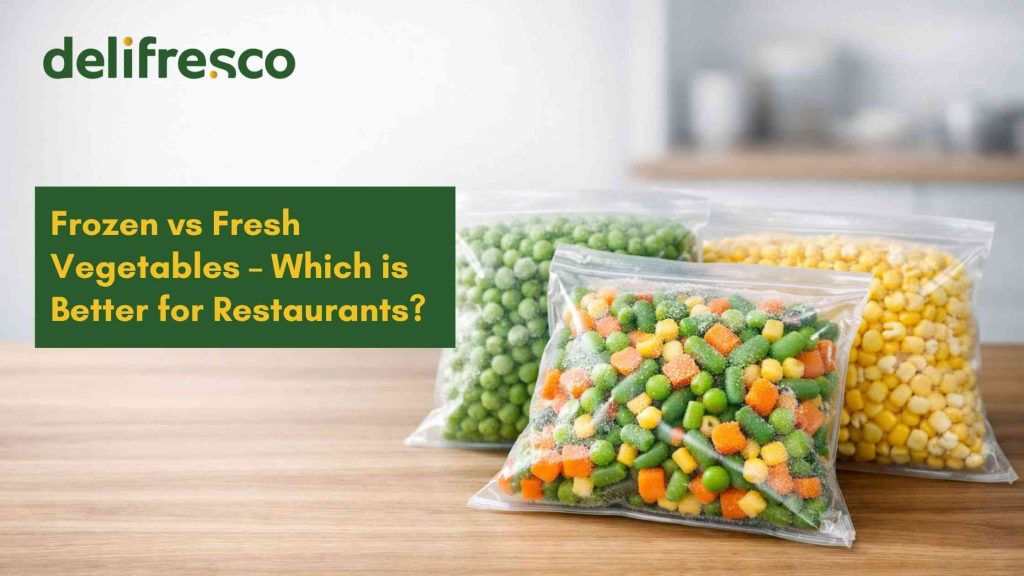
A Practical, Buyer-Focused Guide for Restaurants, Cloud Kitchens, and HoReCa Businesses
By Delifresco Food Service LLP
Introduction: The Real Decision Every Restaurant Is Making
Every restaurant today faces one important operational decision: frozen vs fresh vegetables — which is better for business?
This is no longer just a kitchen preference. It directly affects food cost, wastage, preparation time, and overall profitability.
Many still assume fresh vegetables are superior. However, modern HoReCa businesses, cloud kitchens, and QSRs now rely heavily on frozen vegetables for consistency and efficiency.
So let’s answer this clearly.
Frozen vegetables are generally just as healthy as fresh vegetables. In many cases, they offer better cost control, lower wastage, and higher operational efficiency for restaurants.
Frozen vs Fresh Vegetables – What Actually Matters for Restaurants
When businesses evaluate frozen vs fresh vegetables, they focus on performance, not perception.
Restaurants consider:
cost stability
supply reliability
kitchen efficiency
consistency in output
Fresh vegetables depend on daily procurement. Prices fluctuate. Quality changes frequently. Spoilage happens quickly.
Frozen vegetables offer stable supply, predictable quality, and longer usability. This is why frozen vegetables for HoReCa and restaurants are becoming the preferred choice across India.
Are Frozen Vegetables Healthier Than Fresh?
One of the most searched questions is whether frozen vegetables are healthy or not.
The reality is simple.
Frozen vegetables are harvested at peak ripeness and then quickly frozen using advanced freezing methods. This process locks nutrients almost immediately.
Fresh vegetables often travel long distances. They spend time in storage. During this time, they gradually lose nutrients.
So when people ask whether frozen vegetables lose nutrients, the answer is not what most expect.
Frozen vegetables retain most of their nutrients. In many cases, they match or even outperform fresh vegetables that have been stored for days.
That is why frozen vegetables are now widely accepted as a healthy option, even in professional kitchens.
Why Restaurants Prefer Frozen Vegetables
Restaurants operate on tight margins. Every decision must improve efficiency.
This is where frozen vegetables provide a strong advantage.
First, frozen vegetables significantly reduce wastage. Fresh vegetables spoil quickly, especially in bulk storage. Frozen vegetables last much longer and allow better inventory planning.
Second, frozen vegetables reduce preparation time. Kitchens do not need to wash, peel, or cut large quantities. This saves labor and speeds up service.
Third, frozen vegetables ensure consistency. Every batch looks and tastes similar. This helps restaurants maintain standard quality across dishes.
Fourth, frozen vegetables offer year-round availability. Restaurants do not depend on seasonal supply.
Because of these factors, frozen vegetables improve kitchen efficiency, reduce labor dependency, and support better cost control.
Frozen Vegetables vs Fresh Vegetables Cost Comparison
Cost plays a major role in decision-making.
Fresh vegetables may appear cheaper at purchase. However, restaurants must consider hidden costs.
Fresh produce often leads to high wastage. A portion of inventory becomes unusable due to spoilage. Preparation also requires more labor.
Frozen vegetables reduce these inefficiencies. They offer better yield because most of the product is usable. They also reduce preparation time and labor cost.
When restaurants evaluate the full picture, frozen vegetables often provide better value.
This is why many businesses now focus on frozen vegetables cost saving for restaurants rather than just purchase price.
Shelf Life, Storage, and Wastage: The Biggest Advantage
Shelf life is one of the most critical differences between frozen and fresh vegetables.
Fresh vegetables have a short life cycle. They must be used quickly. Otherwise, they spoil.
Frozen vegetables can be stored for months without significant quality loss. This gives restaurants flexibility.
Reduced spoilage means reduced wastage. Reduced wastage means better profit margins.
Storage also becomes easier. Restaurants can plan inventory more effectively and avoid frequent procurement cycles.
This is a major reason why frozen vegetables are widely used in commercial kitchens.
Taste and Quality: The Practical Reality
Many still question whether frozen vegetables match fresh vegetables in taste.
The answer depends more on cooking technique than on the product itself.
Modern freezing methods preserve texture and flavor effectively. When cooked properly, frozen vegetables deliver consistent taste and appearance.
In high-volume kitchens, consistency matters more than slight variations in freshness.
That is why frozen vegetables work well in restaurants, hotels, catering services, and cloud kitchens.
Frozen Vegetables for HoReCa, Cloud Kitchens, and QSRs
The HoReCa industry demands speed, consistency, and efficiency.
Frozen vegetables align perfectly with these requirements.
Cloud kitchens rely on fast preparation. Frozen vegetables reduce prep time and help maintain uniform quality across orders.
QSRs require standardized output. Frozen vegetables ensure consistent taste and portion control.
Catering businesses need bulk handling with minimal wastage. Frozen vegetables simplify operations.
This explains why frozen vegetables are now essential for modern food businesses.
How to Use Frozen Vegetables in Restaurant Menus
Restaurants today design menus for speed, consistency, and scalability. Frozen vegetables support all three. Chefs use them in high-volume dishes where timing matters. Stir-fries, gravies, rice bowls, pasta, and quick-service items benefit the most.
Because frozen vegetables come pre-cleaned and uniformly cut, chefs maintain portion accuracy across every plate. This helps standardize recipes. It also ensures that every customer receives the same experience.
Restaurants also use frozen vegetables to handle peak hours. Instead of depending on prep teams during rush periods, kitchens can directly cook from frozen stock. This improves service speed without compromising output quality.
How Frozen Vegetables Improve Profit Margins
Profit in food businesses depends on control. Frozen vegetables help restaurants control multiple variables at once.
They reduce unpredictable losses. Fresh vegetables often lead to hidden shrinkage. Frozen vegetables minimize that gap because almost the entire quantity remains usable.
They also improve portion discipline. Kitchens use exact quantities without trimming loss. This leads to better cost forecasting and stable margins.
In addition, frozen vegetables allow bulk planning. Restaurants can lock procurement cycles and avoid last-minute buying at higher costs. Over time, this improves financial predictability.
Operational Efficiency in Commercial Kitchens
Efficiency drives modern kitchens. Frozen vegetables directly support faster operations.
Kitchens no longer rely heavily on prep staff for washing, peeling, and cutting. This reduces dependency on skilled labor. It also reduces delays during shift changes or peak demand.
Frozen vegetables also streamline workflow. Teams move faster because ingredients remain ready to cook. This creates a smoother kitchen rhythm, especially in high-output environments like QSRs and cloud kitchens.
As a result, kitchens operate with fewer disruptions and better coordination.
Procurement & Bulk Buying Strategy for Restaurants
Procurement planning defines long-term success in the food industry. Frozen vegetables simplify this process.
Restaurants can plan purchases based on consumption patterns rather than daily availability. This removes dependency on fluctuating supply chains.
Bulk buying becomes more practical. Since frozen vegetables have longer usability, businesses can stock larger quantities without risk. This reduces procurement frequency and saves administrative effort.
It also strengthens supplier relationships. Regular bulk orders allow better negotiation and smoother logistics over time.
Storage & Handling Best Practices in Commercial Kitchens
Proper handling ensures consistent performance from frozen vegetables.
Restaurants must maintain stable cold storage conditions. Temperature consistency matters more than frequent handling. Once stored correctly, frozen vegetables maintain their structure and usability.
Kitchens should also follow organized storage systems. Clear labeling and rotation practices help maintain inventory clarity. This prevents confusion during service hours.
Handling discipline ensures that product quality remains intact from storage to cooking.
Frozen Vegetable Suppliers in India, Delhi NCR, Noida & Gurgaon
Supply reliability matters as much as product quality.
Restaurants across India actively search for dependable partners who can maintain consistent delivery cycles. This includes businesses looking for frozen vegetables suppliers in India, as well as region-specific suppliers in Ahmedabad, Gujarat, Delhi, Noida, and Gurgaon.
Businesses searching for frozen vegetables supplier India, frozen vegetables supplier Delhi NCR, frozen vegetables supplier Noida, or frozen vegetables supplier Gurgaon prioritize consistency and timely delivery.
Choosing the right supplier ensures uninterrupted kitchen performance.
Future of Frozen Vegetables in India
The frozen vegetables industry in India continues to grow rapidly.
Urban expansion, rising demand for convenience, and the growth of organized food businesses drive this trend. Cloud kitchens and delivery-first brands rely heavily on efficient ingredient systems, which increases adoption of frozen products.
Technology also plays a role. Improved freezing methods and better logistics infrastructure make frozen vegetables more accessible and reliable.
As the industry evolves, frozen vegetables will become an even more integral part of restaurant operations.
Common Mistakes Restaurants Make with Fresh vs Frozen Choices
Many restaurants struggle not because of product choice, but because of poor decision patterns.
One common mistake is over-ordering fresh vegetables without accurate demand estimation. This leads to unnecessary losses.
Another mistake is underestimating preparation workload. Kitchens often allocate extra time and staff for fresh ingredient handling, which affects efficiency.
Some businesses also avoid frozen vegetables due to outdated perceptions. This prevents them from adopting systems that could improve operations.
Recognizing these mistakes helps restaurants make smarter decisions and optimize performance.
How Frozen Vegetables Support Consistent Menu Quality
Consistency defines brand reputation in food service. Frozen vegetables help maintain that standard.
Each batch delivers uniform size, color, and texture. This allows chefs to replicate recipes with precision. Customers receive the same dish quality every time, regardless of season or supply variation.
This consistency becomes even more important for multi-outlet brands. Standardized ingredients ensure that every outlet delivers identical output.
Over time, this builds customer trust and strengthens brand identity.
Role of Frozen Vegetables in High-Demand Food Operations
During peak demand, kitchens must perform without delays. Frozen vegetables act as a stabilizing factor.
They reduce last-minute preparation pressure. Teams can focus on cooking and plating instead of raw material handling.
This becomes crucial for delivery-focused brands. Faster preparation directly impacts delivery timelines and customer satisfaction.
High-demand environments require systems that reduce friction. Frozen vegetables support that requirement effectively.
Decision Guide: When to Choose Frozen Over Fresh
Not every situation requires the same approach. Restaurants must decide based on usage patterns.
Frozen vegetables work best for bulk cooking, repetitive dishes, and high-volume operations. They also fit well in environments where speed and consistency matter more than daily variation.
Fresh vegetables may still suit niche or specialty dishes where immediate sourcing is practical.
However, for most commercial kitchens, frozen vegetables provide a more structured and reliable solution.
Why Delifresco Food Service LLP Aligns with Modern Kitchen Needs
Modern restaurants require partners who understand operational challenges.
Delifresco Food Service LLP focuses on consistency, supply reliability, and quality standards tailored for HoReCa businesses. This approach supports restaurants that aim to improve efficiency while maintaining product quality.
By aligning with evolving industry needs, Delifresco Food Service LLP enables food businesses to operate with greater control and confidence.
Growing Demand for Frozen Vegetables in India
The demand for frozen vegetables in India continues to rise.
Urbanization, busy lifestyles, and the growth of organized food services are driving this change.
Restaurants and food chains are shifting toward solutions that reduce operational complexity.
Frozen vegetables provide that solution.
As a result, the frozen vegetables market in India is expanding rapidly, and adoption within the HoReCa sector continues to increase.
Choosing the Right Frozen Vegetable Supplier
Selecting the right supplier is critical for long-term success.
Restaurants must look for consistent quality, reliable supply, and efficient logistics.
A strong supplier ensures timely delivery, proper cold chain management, and uniform product standards.
Businesses searching for a frozen vegetables supplier in India or specific regions like Ahmedabad, Gujarat, Delhi, Noida, and Gurgaon should focus on reliability and experience.
Why Delifresco Food Service LLP is the Right Choice
For businesses looking for a reliable frozen vegetables supplier in India, Delifresco Food Service LLP provides consistent quality and dependable supply.
The company supports HoReCa businesses, restaurants, and cloud kitchens with bulk supply solutions designed for efficiency.
With strong logistics and quality focus, Delifresco Food Service LLP helps businesses reduce wastage, improve consistency, and optimize kitchen operations.
FAQs – Frozen vs Fresh Vegetables for Restaurants
Are frozen vegetables as nutritious as fresh?
Frozen vegetables are generally as nutritious as fresh vegetables because they are harvested at peak ripeness and frozen immediately. This quick freezing process helps retain vitamins, minerals, and antioxidants. In contrast, fresh vegetables often lose nutrients during transportation and storage. For restaurants, frozen vegetables provide a reliable and nutritionally consistent option for daily use.
Do frozen vegetables reduce food cost in restaurants?
Yes, frozen vegetables help reduce overall food cost in restaurants by minimizing wastage and improving yield. Fresh vegetables often spoil quickly and require trimming, which leads to losses. Frozen vegetables come pre-cleaned and ready to use, which reduces waste and labor effort. Over time, this improves cost control and supports better profit margins in commercial kitchens.
Are frozen vegetables good for restaurants and HoReCa businesses?
Frozen vegetables are highly suitable for restaurants, hotels, catering services, and cloud kitchens because they improve consistency and operational efficiency. They allow kitchens to maintain standard quality across dishes, reduce preparation time, and handle high-volume orders more effectively. This makes them a practical choice for HoReCa businesses focused on speed, scalability, and cost management.
Do frozen vegetables contain preservatives or chemicals?
Most frozen vegetables do not contain preservatives because freezing itself acts as a natural preservation method. The process slows down microbial growth and maintains product quality without the need for added chemicals. High-quality frozen vegetables, especially those processed using IQF technology, retain freshness and nutritional value without artificial additives.
Why are frozen vegetables becoming popular in India?
Frozen vegetables are becoming popular in India due to the growth of modern retail, cloud kitchens, and quick service restaurants. Businesses now prioritize efficiency, consistency, and long shelf life. Frozen vegetables meet these needs by offering stable supply, reduced wastage, and easy storage. As a result, more restaurants and food businesses are adopting frozen products as part of their daily operations.
Can frozen vegetables be used in commercial kitchens?
Yes, frozen vegetables are widely used in commercial kitchens, including restaurants, hotels, catering services, and QSR chains. They are ideal for bulk cooking, standardized recipes, and fast service environments. Their ready-to-use format helps kitchens maintain speed and consistency, especially during peak hours when quick preparation is critical.
How do frozen vegetables improve kitchen efficiency?
Frozen vegetables improve kitchen efficiency by reducing preparation time and simplifying workflow. Since they are pre-washed and pre-cut, kitchen staff can focus directly on cooking rather than raw ingredient processing. This speeds up operations, reduces dependency on skilled labor, and ensures smoother service during busy hours in restaurants and cloud kitchens.
Which frozen vegetables are commonly used in restaurants?
Restaurants commonly use frozen vegetables like green peas, sweet corn, mixed vegetables, broccoli, and baby corn. These products are versatile and suitable for a wide range of dishes, including curries, rice preparations, continental recipes, and fast food items. Their consistent quality and easy availability make them essential ingredients in commercial kitchens.
Are frozen vegetables better than fresh for cost control?
Frozen vegetables are often better for cost control because they offer predictable pricing and reduce hidden losses. Fresh vegetables may seem cheaper initially, but spoilage, trimming, and inconsistent supply increase overall costs. Frozen vegetables provide better yield and longer usability, which helps restaurants maintain stable food costs over time.
How long can restaurants store frozen vegetables safely?
Restaurants can store frozen vegetables for several months when maintained at proper freezing temperatures. Unlike fresh vegetables, which spoil within days, frozen vegetables remain usable for extended periods without significant quality loss. This allows better inventory planning and reduces the need for frequent procurement.
Are frozen vegetables suitable for bulk buying?
Frozen vegetables are ideal for bulk buying because of their long shelf life and stable quality. Restaurants can purchase larger quantities without worrying about spoilage. This reduces procurement frequency and helps maintain consistent stock levels, which is essential for high-volume food operations.
How do frozen vegetables reduce wastage in restaurants?
Frozen vegetables reduce wastage by offering higher usable yield compared to fresh produce. Fresh vegetables often require trimming and may spoil quickly, leading to losses. Frozen vegetables are processed and portioned efficiently, which ensures that most of the product is usable, helping restaurants minimize waste and improve profitability.
Are frozen vegetables reliable for consistent food quality?
Yes, frozen vegetables are highly reliable for maintaining consistent food quality because they are processed under controlled conditions. Each batch delivers uniform size, texture, and appearance, which helps chefs replicate recipes accurately. This consistency is especially important for restaurants with standardized menus and multiple outlets.
Why do cloud kitchens prefer frozen vegetables?
Cloud kitchens prefer frozen vegetables because they support speed, consistency, and scalability. These kitchens rely on fast preparation and standardized output to handle high order volumes. Frozen vegetables reduce prep time and ensure uniform quality, which helps cloud kitchens maintain efficiency and customer satisfaction.
How to choose the right frozen vegetables supplier in India?
Restaurants should choose a frozen vegetables supplier based on quality consistency, supply reliability, and cold chain management. A good supplier ensures timely delivery, proper storage conditions, and uniform product standards. Businesses should also consider suppliers who understand HoReCa requirements and can support bulk operations efficiently.
Final Verdict: Which is Better?
So, frozen vs fresh vegetables — which is better?
For home cooking, both options work well.
For restaurants and commercial kitchens, frozen vegetables clearly provide more advantages.
They offer better cost control, longer shelf life, reduced wastage, faster preparation, and consistent quality.
That is why more restaurants are shifting toward frozen vegetables as a smarter operational choice.